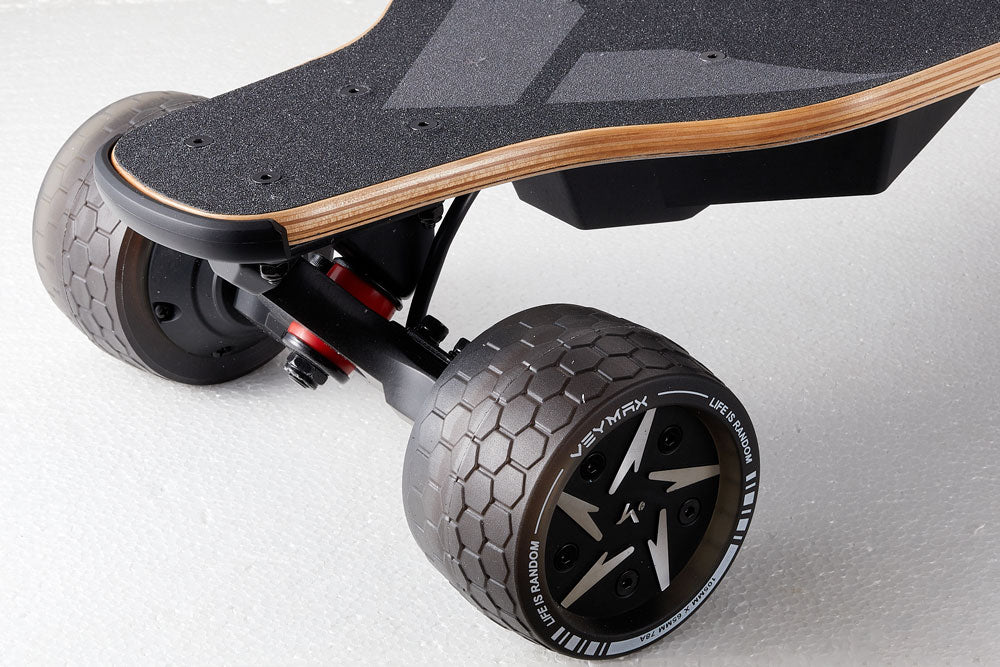
Entering the world of electric skateboards can be quite intimidating due to the “heavy terms” used to best helmets for electric skateboards describe the performance of electric skateboards. Terms like torque, watts, voltage, amps, etc. can be difficult to understand, especially if you don’t have a background in mechanics or electronics. To someone buying a skateboard for the first time, all of these terms might seem like rocket science. But they’re really simple words to describe various performance aspects of a skateboard.
Knowing the terminology associated with electric skateboard performance will allow you to choose the ideal board for your specific needs and gain a better understanding of your board. By learning about e-Skateboard motors, etc., and how they affect performance, you will have a completely different perspective on your skateboard.
The meaning of motor power and performance
Motor power
Electric skateboard motor power is measured in watts (W), which is essentially a measure of power, equivalent to joules per second, or energy per second. 745.7 watts equals 1 horsepower. The wattage stated on the motor is the power the motor can draw. A motor with a higher power rating means it will use a lot of energy in a short amount of time. This also means that the motor is powerful, because the more energy the motor dissipates, the more mechanical power it produces. Because of the power, the motor will accelerate faster, support heavier riders and climb steeper hills. However, it will drain the battery faster and make the board heavier.
Another aspect of motor power is torque. Torque is the twisting force produced by the motor that is used to spin the wheels of Electric Skateboard and ultimately propel it forward. The higher the power rating of an electric skateboard, the greater the torque and acceleration.
Motor performance
The performance of the motor affects various indicators of the electronic skateboard, especially speed, acceleration, climbing ability and load-bearing capacity. There are two main methods of measuring motor performance: nominal power and peak power.
Peak power is the most powerful point in the motorcycle. Peak power is the maximum torque, power and speed a motor can achieve. Motors are designed to run at or near peak power to get the most out of them. However, a motor can be operated outside of its design range and still produce power, which will shorten the life of the motor or cause frequent failures. Peak power is not an inherently accurate way to measure motor performance unless you want to compare two motors. Peak power is usually 2 to 5 times greater than nominal power. As a result, some manufacturers quote peak power instead of nominal power to boost the stats of their skateboards and gain a marketing advantage.
Nominal power is the term used to define the total power at its rated voltage and frequency. Nominal power, also known as continuous power or continuous power, is the maximum power an e-skateboard motor can consume indefinitely. Nominal wattage is usually considered the actual wattage of the motor, allowing you to compare the power performance of two skateboards. Note, however, that several factors determine the overall performance of a skateboard, including its efficiency.
 Site Title
Leave a comment